Commercial Roof Replacement
Hahn Roofing helps property owners and managers across Northern Arizona replace commercial roofing systems with clarity and confidence. We evaluate what’s happening, explain the options, and install roof systems that fit the building, the budget, and how the space is actually used.

When Repairs Stop Making Sense, Replacement Should Feel Like a Plan, Not a Gamble.
We help you understand what’s failing, what’s still working, and what kind of roof system will hold up over time.
If your building is dealing with recurring issues or widespread wear, let’s talk through next steps.
COMMERCIAL ROOF REPLACEMENTS
Local Experience You Can Trust
When Replacement Becomes the Smarter Option
Commercial roof replacement usually isn’t triggered by a single event. It’s the result of patterns that keep repeating.
You may notice:
- Leaks appearing in more than one area
- Repairs holding for a while, then failing again
- Soft or spongy sections underfoot
- Persistent ponding that wasn’t there before
- Aging membranes, seams, or coatings reaching the end of their service life
At a certain point, chasing leaks costs more than it saves. Replacement allows you to reset the system instead of reacting to the next problem.
Choosing the Right System for the Building
Not every commercial building needs the same roof. Replacement decisions should account for how the building is used, not just what’s on top of it.
We walk through factors like:
- Roof slope and drainage design
- Foot traffic and equipment access
- Mechanical units, penetrations, and future service needs
- Budget planning and lifecycle costs
- How much disruption the building can tolerate
From there, we recommend systems that make sense for the structure and the people who rely on it every day.
Planning Around Operations
Most commercial properties can’t shut down for a roof replacement.
We plan projects around real-world conditions, including tenant schedules, deliveries, parking access, and safety requirements.
That planning work happens before the first material shows up on site.
The goal is to keep the property usable while the work gets done — without cutting corners on installation.
Experience Matters at Replacement Scale
Commercial roof replacement is different from residential work. The systems are larger, the details are more complex, and small mistakes have bigger consequences.
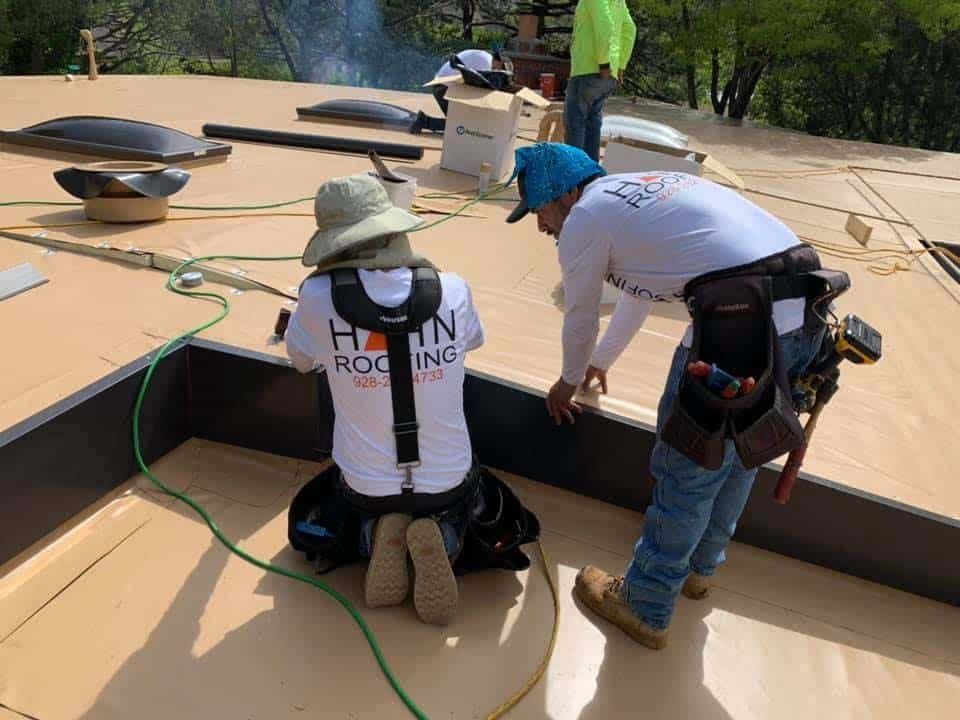
We take a system-level approach. That means looking at underlayment, insulation, flashing, drainage, penetrations, and transitions as part of one connected structure. When those elements work together, the roof performs better and lasts longer.
40+
YEARS OF
EXPERIENCE
HAHN ROOFING
Clear Communication From Start to Finish
Replacement projects work best when everyone knows what to expect. We explain the condition of the existing roof, outline replacement options, and walk through timelines and access planning before work begins.
You’ll know:
- What’s being removed and what stays
- How long the project is expected to take
- How the work may affect tenants or operations
- What to expect once the new roof is complete
If something changes, we talk it through before moving forward.
Serving Sedona, Cottonwood, Camp Verde, and the Verde Valley
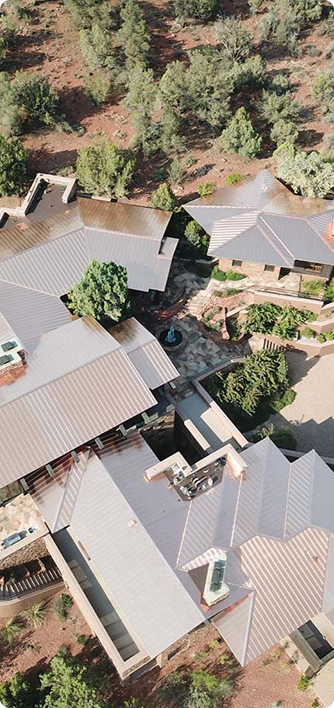
Hahn Roofing replaces commercial roof systems throughout Yavapai County, with a focus on Sedona, Cottonwood, Camp Verde, and surrounding Verde Valley communities.
Different elevations, sun exposure, and weather patterns affect how roofs age and fail. We factor those conditions into every replacement so the new system fits the environment it’s going into.
A replacement roof should make future maintenance easier, not harder. We build systems with access, drainage, and long-term care in mind so inspections and upkeep don’t turn into constant disruptions.
The goal is a roof that performs quietly in the background — not one that keeps demanding attention.