Winter Flat Roof Prep for Sedona, Cottonwood, and the Verde Valley
Flat roofs do well in Arizona, but winter is when small drainage issues turn into real headaches. It is rarely one big event. It is usually a slow backup at a scupper. A drain that runs fine until leaves pile up. A seam that only shows itself when wind pushes rain sideways.
If you have a flat or low-slope roof in Sedona, Cottonwood, Clarkdale, or Cornville, the best move is simple. Get ahead of drainage and detail work before the first hard cold stretch.
This is a homeowner checklist. It stays on the safe side of the ladder.
What winter does to flat roofs here
A flat roof is not truly flat. It is built with a slight pitch so water moves toward drains and scuppers. When that flow gets slowed down, water sits longer than it should.
In the Verde Valley, winter adds a few wrinkles.
- Cold nights slow drying.
- Wind-driven rain finds weak transitions.
- Debris shows up right when you need clear drainage.
If the roof already has a soft spot, winter does not create the problem. It puts it on display.
A quick checklist you can do in 15 minutes
Do this once after leaves drop. Do it again after any big storm.
Look at the scuppers and drain openings.
If they are packed, clear them.
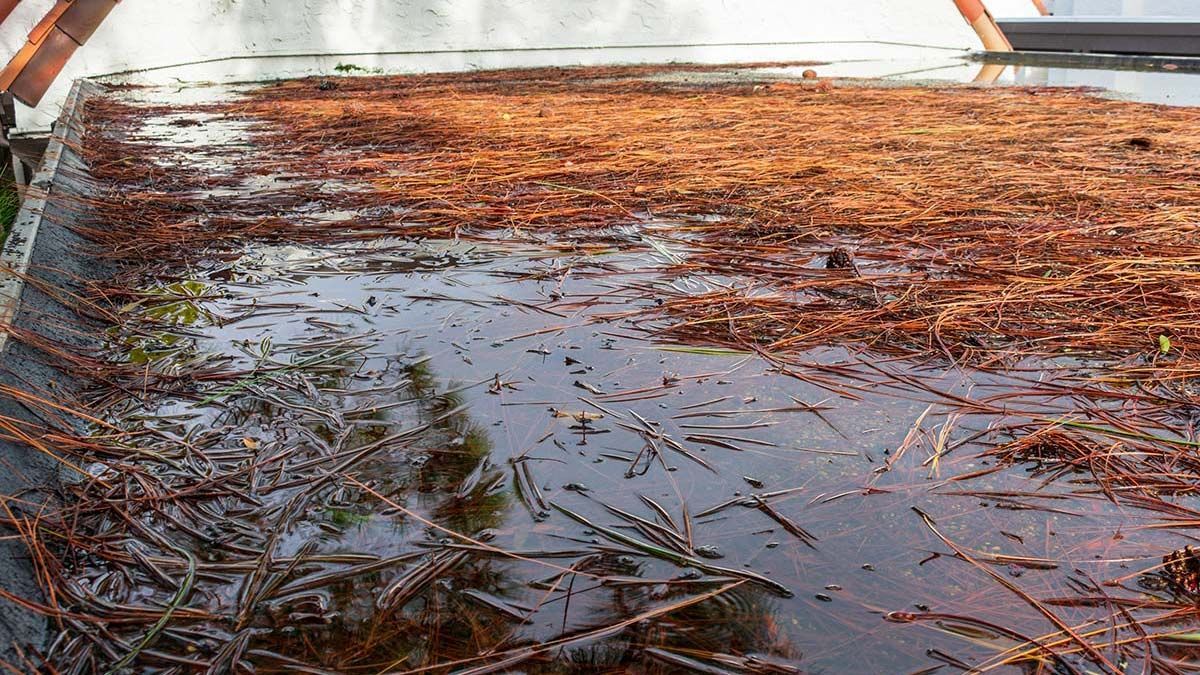
Watch for ponding water after a storm.
If water is still sitting the next day, take a photo.
Check the parapet walls.
Look for cracking or gaps where the wall meets the roof.
Scan the roof edge line.
Look for lifting or separation where materials terminate.
Look at penetrations.
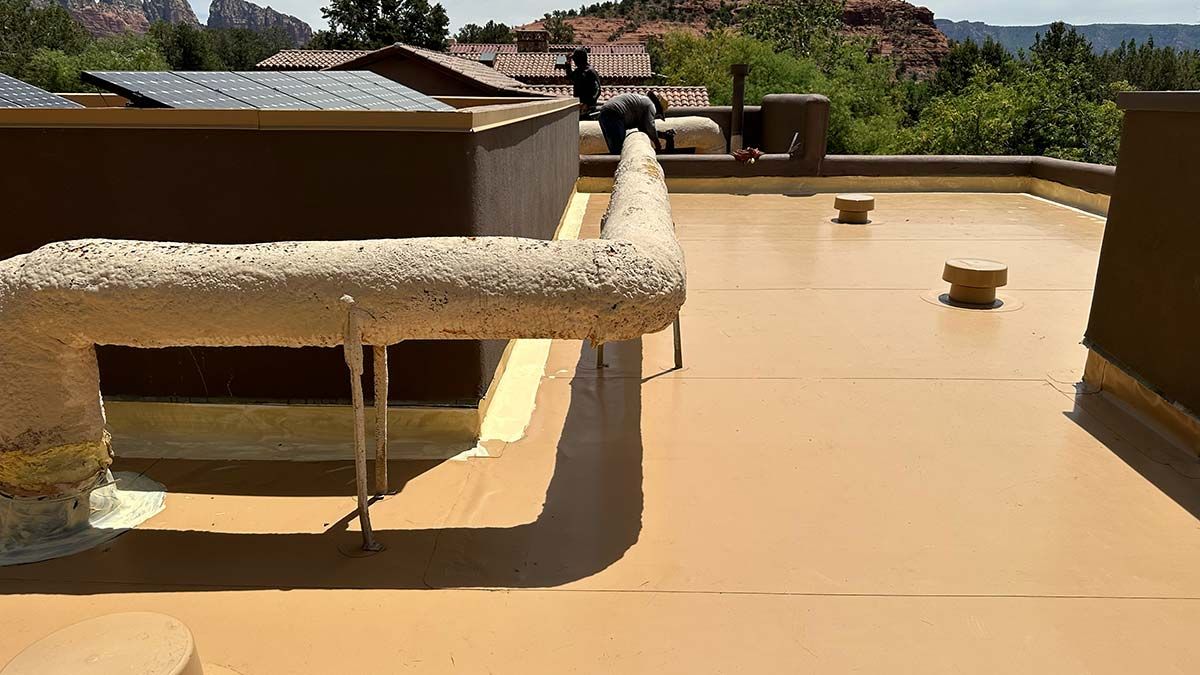
Pipes, vents, skylights, and HVAC supports are common leak zones.
Check downspouts at ground level.
Make sure water is actually moving away from the house.
Look inside too.
Ceiling stains, damp smells, and bubbling paint are early signals.
One useful reminder: FEMA’s winter storm prep guidance includes clearing rain gutters and repairing roof leaks as part of home readiness. That same basic logic applies to flat roof drainage points.
If your roof is foam, what to watch for
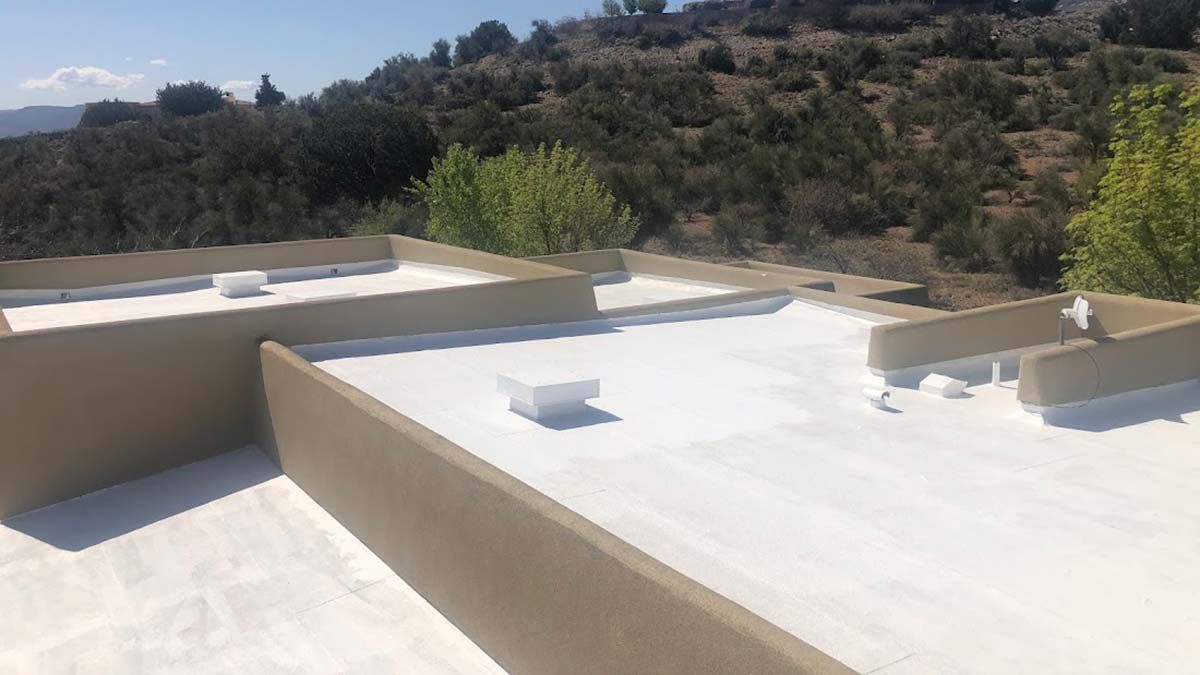
Foam roofs usually fail at the surface first. Not all at once. It starts as wear in the coating.
- Look for thin spots.
- Look for cracking.
- Look for areas that feel rough or chalky.
A foam roof can still be fine even if it looks a little weathered. The concern is when water starts lingering on top. Foam systems rely on that protective layer. If the coating has aged out, it can be time for a recoat before you get into a cycle of patching.
Foam can be a good roofing option here. It just needs the top layer kept in fighting shape.
If your roof is a membrane, what to watch for
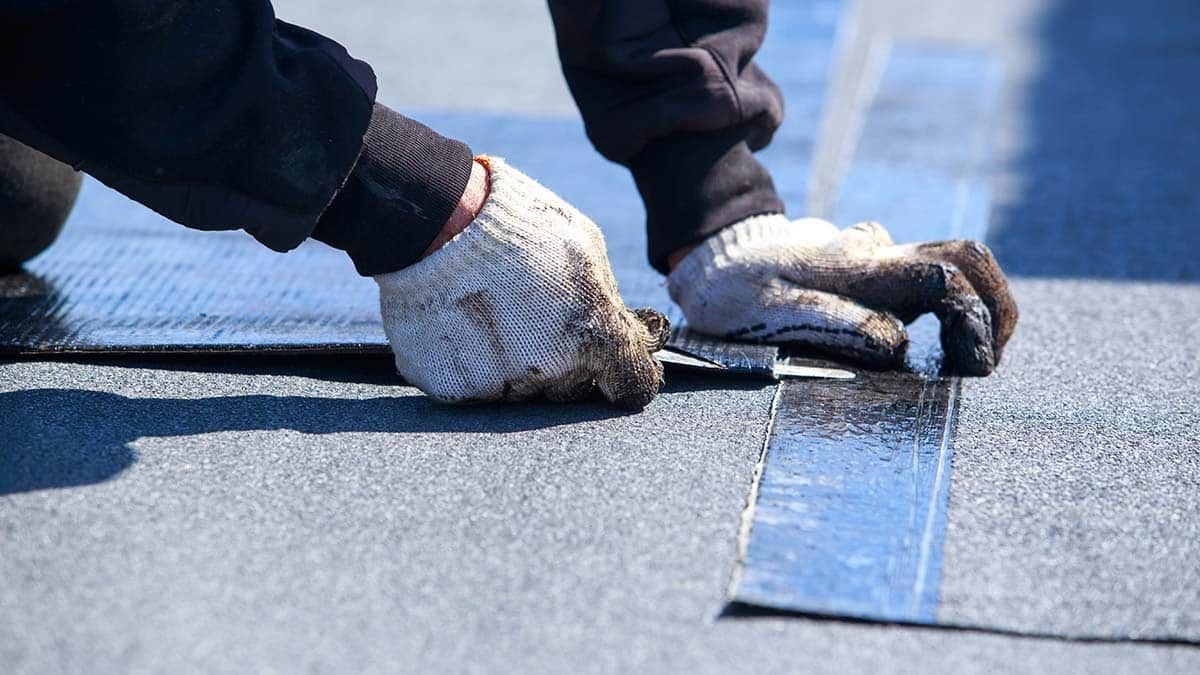
Flat roofs often use single-ply membranes. These systems depend on seams, edges, and penetrations staying tight.
Seams matter in winter.
Temperature swings make materials move.
A weak weld or seam can show itself when cold hits.
- Look for wrinkles that were not there before.
- Look for loose flashing at walls and terminations.
- Look for water staining at the base of parapet walls.
Most homeowners will not be able to spot seam issues with certainty. That is fine. The point is to catch the obvious stuff early, before water gets under the system.
The “call someone” list
Call a roofer if you see any of this.
- Ponding that stays more than a day
- Interior stains that grow after storms
- Cracks at parapet transitions
- Loose edge metal or lifting at terminations
- Recurring leaks during wind-driven rain
If you are in the middle of winter and you are already seeing symptoms, the priority is stopping water first. Then you can plan the longer fix.
A couple of helpful links on your site
If you want a broader overview, these two pages are good context.
If you want the service-level details and options Hahn installs, start here.
If you want someone to look at drainage, seams, and transitions on your specific roof, use the contact form and we will point you in the right direction.